

The Birds are Back to Troup
Springtime sees the return of the seabirds to Troup Head, the RSPB site situated on the coastline between Crovie and Pennan in the north east of Scotland. The Northern gannets, recognised by their large white bodies, with black wing tips, their piercing pale blue eyes and yellow crested heads, account for the majority of birds found here. They have enjoyed winter sun in hotter parts but have returned to the dramatic cliffs of Troup Head for another breeding season. RSPB Troup Head is the only mainland gannet colony in Scotland.
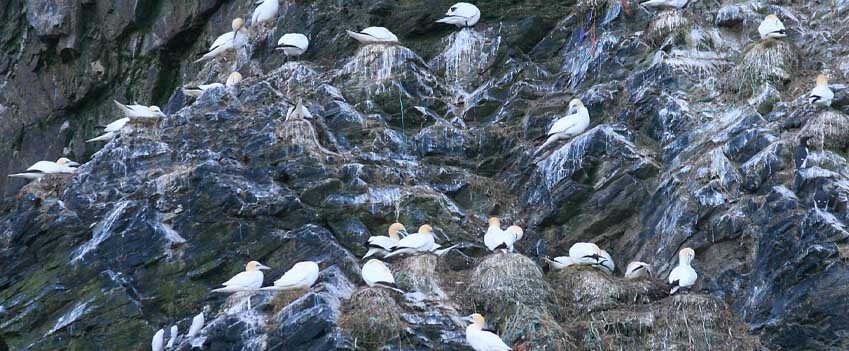
Also present, but in lesser numbers are the dark brown backed, white bellied, upright guillemots. These are usually found on the lower ledges nearer the sea. Guillemots are not considered migratory but spend the winter months further out to sea, where they moult. Some however will travel as far as the Mediterranean to moult. They will temporarily lose the ability to fly while they wait for new feathers to replace the old.
Kittiwakes pepper the upper rock faces competing with the gannets for a pitch. They are medium sized gulls with yellow bills, light grey backs and white underbellies. They too leave the cliffs in winter favouring deeper water far out at sea.
Gannets typically start to breed between the ages of four and five although some birds wait till they are six and fully mature. Guillemots typically breed between the ages of five and seven and kittiwakes between three and five years.
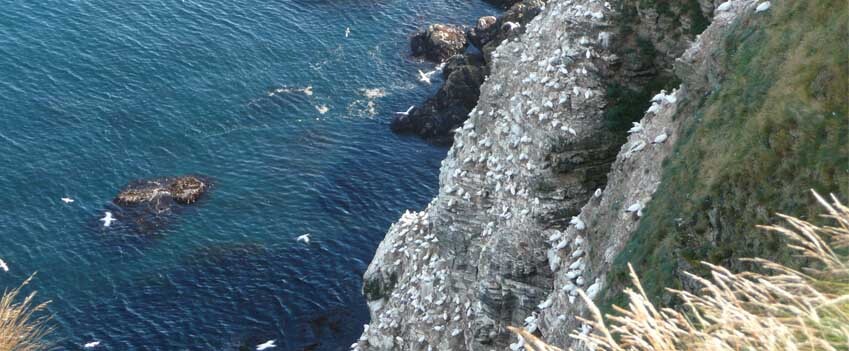
These seabirds nest on the cliffs at Troup Head because of the safety this site offers. Not many predators are brave enough to descend the sheer 90-metre rocky cliffs in search of eggs or chicks. This, coupled with the fact that there is an abundant supply of food on their doorstep by way of the nutrient rich North Sea, means that Troup Head is an ideal breeding ground and one which the birds return to year on year.
Due to its popularity with these birds and others, Troup Head became an RSPB nature reserve in 2005, offering greater protection to the birds and making the site more accessible.
Each year, over 50,000 seabirds nest at Troup Head. As summer approaches, it's a worthwhile and accessible spot to visit, with paths and fences along the cliffs, not to mention the dramatic coastline and beautiful sea views.
There are no items in this category.